World Meditation Day Event at the House of Lords, UK
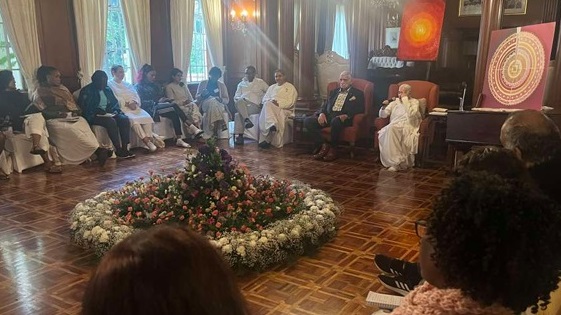
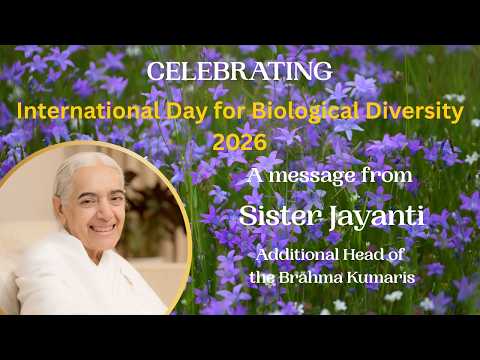
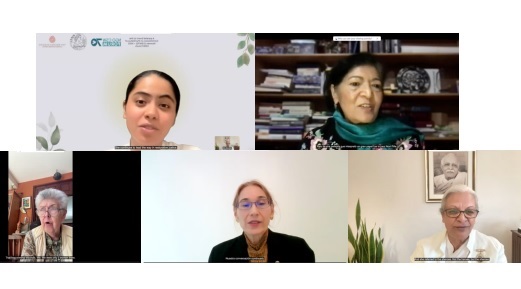
The House of Lords hosted a high-level curtain-raiser event for UN World Meditation Day 2025 on 9th December 2025, under the theme Inner Peace; Global Harmony. The gathering brought together UK Members of Parliament and peers, diplomats, senior officials from the police and armed forces, professionals from health, law, arts and media, and leaders from civil society. The event was hosted by Lord Raval OBE and organised by the Brahma Kumaris, in partnership with the Sanskruti Centre of Cultural Excellence, in the presence of Sister Jayanti, Additional Administrative Head of the Brahma Kumaris.

The evening highlighted the growing recognition of meditation as a practical and effective tool for individual well-being and social cohesion. Speakers explored how inner emotional stability contributes to harmonious communities, ethical leadership, and more resilient institutions. Evidence was shared on the benefits of regular meditation practice, including stress reduction, enhanced emotional regulation, improved focus, and strengthened empathy — qualities increasingly relevant in policy-making, education, healthcare, and governance.
Addressing the significance of the UN’s recognition of meditation, Sister Jayanti described it as “an idea whose time has come,” noting that meditation has moved “from the periphery to the establishment.” She emphasised that its presence across all fields of human endeavour reflects proven results. Using a simple but powerful analogy, she explained, “I can’t always reduce the stressor, but I can increase my own capacity to deal with all these things.”
Lord Raval OBE, reflecting on the multiple crises facing the world today, underlined the moral and spiritual importance of inner transformation, stating, “You don’t counter darkness with more darkness; you do it with light… We need you [the Brahma Kumaris] more than ever now.”
Baroness Verma spoke of meditation as a grounding practice for leadership and decision-making. She observed, “Meditation is about me getting myself right before I can go out and help others get right,” adding that moments of collective reflection may help heal not only individuals, but society and the planet itself.
Participants also experienced a short guided meditation led by Sister Jayanti, offering a direct experience of the calm and clarity discussed throughout the evening. As the UK continues to face significant mental health challenges across all age groups, the event reinforced meditation’s value as a low-cost, accessible, and non-clinical complement to national well-being strategies.
The gathering served as a timely and meaningful prelude to UN World Meditation Day, observed globally on 21 December, and concluded with an invitation for all participants to join the public meditation event in London on that date.
Greetings of peace for the New Year!
Greetings of peace at the New Year!
There’s a reason we mark anniversaries like New Years – because they offer us a vantage point to take stock of the moment we’re in and of the time just ahead. It’s like we have climbed to a peak from which we can see the future. For the Brahma Kumaris, this is not just the start of 2026.
It is the start of the 90th anniversary of our founding in 1936 in India. Our founder had experiences that gave him glimpses of the future world. He saw the dark times we are living through and how lost and sad many would feel. And he also saw the incoming light of a new ascending world.
I have lived my whole life in the awareness of the coming world of light and happiness. I have met with thousands of people who are searching for a renewed purpose. There is no higher purpose than awakening to your true identity of being a soul and experiencing God’s love.
My wish for everyone in this new year is to discover your true identity as spirit and to feel the close companionship of God. Because once this happens, you will naturally have good wishes and pure feelings for every soul in the world. And this is what the world needs now.
Love and warm wishes for the New Year,
Sister Mohini
Spiritual and Administrative Head of the
Brahma Kumaris
And the Peace Village family
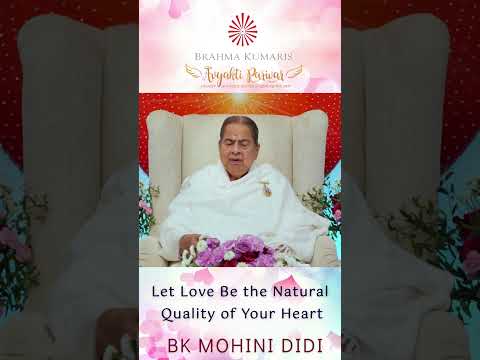
The gentle shakti of BK Mohini Didi
BK Mohini Panjabi has been appointed as the Administrative and Spiritual Head of the Brahma Kumaris, the sixth female elder to lead this global movement since its founding in 1936. Journeying from post-Partition India to leading The Brahma Kumaris, BK Mohini Didi’s visionary leadership continues to make spirituality tangible, accessible, and deeply relevant. Before accepting this position, she spent more than six decades channeling silent strength, spiritual knowledge, and universal love as Regional head of the Americas region of the Brahma Kumaris, transforming countless lives, through her love of truth, natural dignity, and light.
BK Environmental Commitment
A wider view
The Brahma Kumaris Environmental Policy aims to encourage all of us throughout the organisation to feel that we are guardians of the Earth's resources.
We can help each other to grow in terms of our awareness of the natural world as a living system that needs our care; and deepen our concern for cultures living in environmentally susceptible lands. By becoming more mindful of these issues and more compassionate in our attitudes we can make environmental choices that can be felt in all spheres of our lives – in our homes and personal life as well as in Brahma Kumaris activities and buildings. We will use all resources in a more mindful and sustainable way.
The six main attitudes that will empower our environmental approach are:
|
1. Living with Simplicity – choosing a vegetarian/plant-based diet, using utilities and resources mindfully, minimising waste and pollution. |
2. Buying Compassionately – purchasing local produce and/or environmentally sensitive products and services where budgets allow. |
|
3. Using Economically – using products and resources carefully, avoiding waste, being mindful of life-cycles (Rethink, Refuse, Reduce, Reuse, Recycle, Re-Earth (compost), founded on respect and gratitude. |
4. Learning Continuously – understanding and improving our relationship with matter; working in partnership with other organisations, sharing best practices. |
|
5. Sharing Generously – disseminating information in order to encourage a mindset of inclusivity and reciprocity in initiatives and projects. |
6. Leaving No Trace – Leaving a place as you found it, or better than you found it. Promoting responsible behaviour when engaging with nature, ensuring that our human activities leave a positive impact on the environment. |
Download the Full Environmental Guiding Principles for BK centers